
Decodo and NetNut are both strong proxy providers, but they are made for different types of users.
Decodo, formerly Smartproxy, is known for affordable residential proxies, easy setup, clean dashboard, wide location coverage, scraping APIs, and beginner friendly tools. It is a good option for SEO users, small agencies, ecommerce teams, developers, ad verification users, social media managers, and anyone who wants reliable proxies without paying enterprise level prices.
NetNut is a premium proxy provider focused on residential proxy performance, direct ISP routing, unlimited connections, and high volume data collection. It is a strong option for teams that need fast and stable residential proxies for web scraping, SEO tracking, ecommerce price monitoring, ad verification, travel fare tracking, and market research.
Both providers are good. But they are not equal for every use case.
Decodo is better if you want lower entry pricing, easier setup, flexible residential plans, strong targeting, and a more beginner friendly experience.
NetNut is better if you want high volume residential proxy traffic, unlimited connections, direct ISP based routing, and better value at larger bandwidth levels.
So, which one should you choose?
Choose Decodo if you want affordable proxies with strong features and a simple dashboard.
Choose NetNut if you need large scale residential proxy traffic and want stronger performance for serious scraping workloads.
Now let’s compare both in detail.
Quick Comparison Table: Decodo vs NetNut
| Feature | Decodo | NetNut |
|---|---|---|
| Former Name | Smartproxy | NetNut |
| Best For | Beginners, SEO users, agencies, ecommerce scraping, ad verification, small and mid sized teams | High volume residential scraping, SEO tracking, ecommerce monitoring, ad verification, data teams |
| Residential Proxy Pool | 115M plus ethically sourced IPs | 85M plus residential IPs |
| Location Coverage | 195 plus locations | 195 plus countries |
| Residential Pricing | Starts at $11.25 per month for 3 GB | Starts at $99 per month for 28 GB |
| Pay As You Go | $4 per GB on current pricing table | Not the main residential pricing model |
| Lowest Public Residential Rate | From $2 per GB on larger plans | $1.87 per GB monthly on 2 TB plan, or $1.59 per GB with annual billing |
| Entry Cost | Lower | Higher |
| Geo Targeting | Continent, country, state, city, ZIP code, ASN | City and state selection |
| Protocols | HTTP(S) and SOCKS5 | HTTP, HTTPS, SOCKS5 |
| Sessions | Rotating and sticky sessions | Rotating residential proxy sessions |
| Concurrent Connections | Suitable for scraping tools and bots | Unlimited connections on residential packages |
| Scraping Tools | Web Scraping API, eCommerce API, SERP API, Social Media API, Site Unblocker | Website Unblocker, SERP Scraper API, proxy products |
| Ease of Use | Easier for beginners | Easy for proxy focused users, but higher starting cost |
| Best for Beginners | Better choice | Good, but more expensive to start |
| Best for Advanced Users | Good for growing teams | Better for high volume residential proxy users |
| Overall Strength | Affordable and easy proxy platform | High volume residential proxy performance |
Decodo Overview
Decodo is the new name for Smartproxy. The provider has built a strong reputation for simple proxy setup, good pricing, clean dashboard experience, and reliable residential proxies.
Decodo is a good fit for users who want strong proxy features without dealing with a complicated enterprise platform. You can use it for SEO rank tracking, ecommerce price monitoring, market research, ad verification, account management, public web scraping, and geo targeted browsing.
The platform offers residential proxies, static residential proxies, mobile proxies, datacenter proxies, Site Unblocker, Web Scraping API, eCommerce Scraping API, SERP Scraping API, and Social Media Scraping API.
Its residential proxy network includes 115M plus ethically sourced IPs in 195 plus locations. That gives users enough scale for most normal scraping and data collection tasks.
The main reason Decodo stands out is its balance. It is not the cheapest proxy provider in the market, and it is not the most enterprise heavy platform either. It sits in the middle. It gives you strong features, good usability, and fair pricing.
Decodo Key Features
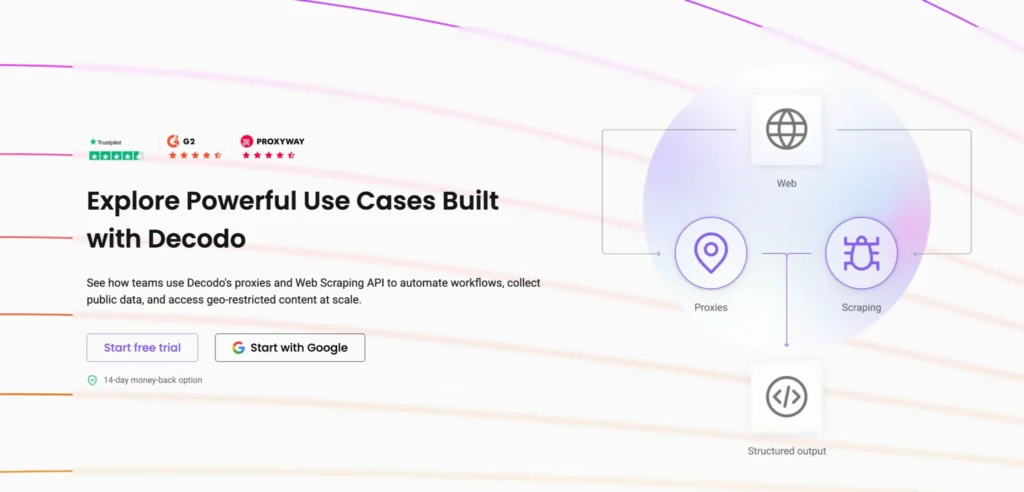
Decodo offers 115M plus residential IPs across 195 plus locations. This is a large enough pool for SEO tracking, ecommerce monitoring, ad verification, public scraping, review monitoring, and market research.
Its residential proxies support HTTP(S) and SOCKS5. This makes them easy to connect with scraping tools, browser extensions, SEO software, automation tools, bots, and proxy managers.
Decodo also offers advanced location targeting. Users can target by continent, country, state, city, ZIP code, and ASN. This is very useful for local SEO checks, regional price monitoring, location based ad checks, and market research.
The platform supports both rotating and sticky sessions. Rotating sessions are useful when you want a fresh IP often. Sticky sessions are better when you need to keep the same IP for a period of time.
Decodo also lists strong performance numbers for residential proxies, including less than 0.5 second average response time, 99.92 percent success rate, and 99.99 percent uptime.
Another key feature is its Web Scraping API. This tool helps users scrape websites without manually handling proxy rotation, CAPTCHAs, IP blocks, and JavaScript rendering. It can return data in formats like HTML, JSON, CSV, XHR, PNG, and Markdown.
Decodo also offers Site Unblocker. This is useful when a website blocks normal proxy traffic and you want a managed tool to handle anti bot systems.
Decodo Pros
Decodo is very beginner friendly. The dashboard is simple, the pricing is easy to understand, and users can start with a small residential plan.
The entry price is also much lower than NetNut. Decodo starts at $11.25 per month for 3 GB, while NetNut starts at $99 per month for 28 GB. This makes Decodo easier for small teams and first time proxy users.
Decodo also has strong location targeting. City, ZIP code, state, country, continent, and ASN targeting give users a lot of control for local data collection.
The platform is also flexible. You can use residential proxies, datacenter proxies, mobile proxies, static residential proxies, scraping APIs, or Site Unblocker depending on your task.
Another advantage is its scraping API ecosystem. Decodo offers web scraping, ecommerce scraping, SERP scraping, and social media scraping tools. This is useful for users who do not want to build every scraper from scratch.
Decodo Cons
Decodo is strong, but it is not always the best option for very high volume residential proxy usage. NetNut can become cheaper at larger traffic levels, especially with annual billing.
Decodo also has a smaller residential proxy pool than some premium enterprise providers, though its 115M plus IP pool is still large.
For very heavy scraping operations, NetNut’s unlimited connections and ISP based routing may be more attractive.
Decodo is excellent for small and mid sized teams, but some enterprise teams may prefer NetNut if their main goal is fast, large scale residential proxy traffic.
Decodo Pricing
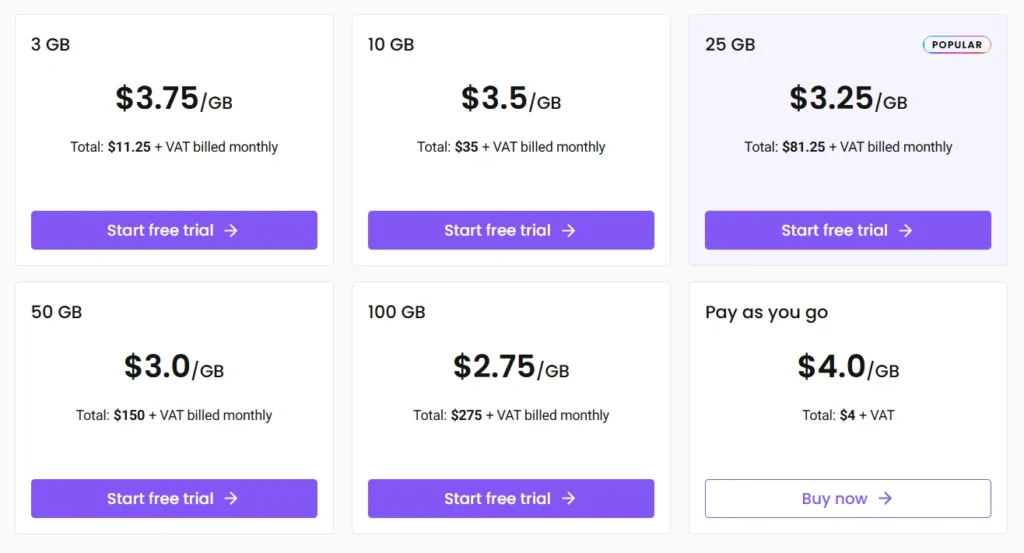
Decodo residential proxy pricing is one of its strongest points. It has small plans, pay as you go pricing, and bigger plans for higher usage.
| Decodo Residential Plan | Included Traffic | Price Per GB | Monthly Cost |
|---|---|---|---|
| 3 GB Plan | 3 GB | $3.75 per GB | $11.25 per month plus VAT |
| 10 GB Plan | 10 GB | $3.50 per GB | $35 per month plus VAT |
| 25 GB Plan | 25 GB | $3.25 per GB | $81.25 per month plus VAT |
| 50 GB Plan | 50 GB | $3.00 per GB | $150 per month plus VAT |
| 100 GB Plan | 100 GB | $2.75 per GB | $275 per month plus VAT |
| Pay As You Go | Flexible | $4.00 per GB | Starts from $4 plus VAT |
| Enterprise Plans | Larger volume | From $2.00 per GB | Custom or volume based |
Decodo also offers other proxy and scraping products.
| Decodo Product | Starting Price | Best For |
|---|---|---|
| Residential Proxies | From $2 per GB on larger plans | Web scraping, SEO, ecommerce, ad verification |
| Static Residential Proxies | From $0.27 per IP | Stable sessions and account based workflows |
| Mobile Proxies | From $2.25 per GB | Mobile scraping, mobile ad checks, app testing |
| Datacenter Proxies | From $0.02 per IP | Fast and cheaper tasks on easier websites |
| Site Unblocker | From $0.95 per 1,000 requests | Blocked websites and anti bot systems |
| Web Scraping API | From $0.09 per 1,000 requests on larger plans | Managed web data extraction |
Decodo is very attractive for users who want a low cost starting point. You can begin with a small plan and upgrade only when your usage grows.
Decodo Best For
Decodo is best for beginners, freelancers, SEO agencies, ecommerce teams, ad verification users, small developers, social media managers, and growing businesses.
It is also a good fit if you need location targeting but do not want to pay high enterprise prices.
Choose Decodo if you want a simple, affordable, and flexible proxy provider with strong scraping tools.
NetNut Overview
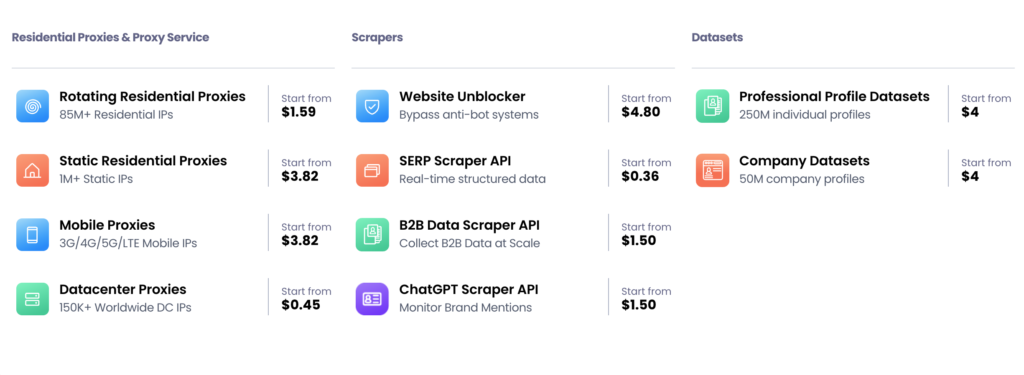
NetNut is a premium proxy provider focused on residential proxy performance. It offers residential proxies, rotating residential proxies, static residential proxies, mobile proxies, datacenter proxies, ISP proxies, Website Unblocker, SERP Scraper API, and scraping related tools.
NetNut’s main strength is its residential proxy infrastructure. It offers 85M plus residential IPs across 195 plus countries. It also promotes direct ISP routing, which is designed to improve speed, stability, and reliability for data collection.
Unlike Decodo, NetNut has a higher starting price. Its residential plans begin at $99 per month for 28 GB. That may be too much for very small users, but it can make sense for teams that already know they need meaningful monthly traffic.
NetNut is especially useful for high volume scraping teams. It includes unlimited connections on all residential packages, along with city and state selection, API access, IP whitelist, and dedicated account manager support.
This makes NetNut a strong choice for users who already have a scraping setup and need reliable residential proxy traffic at scale.
NetNut Key Features
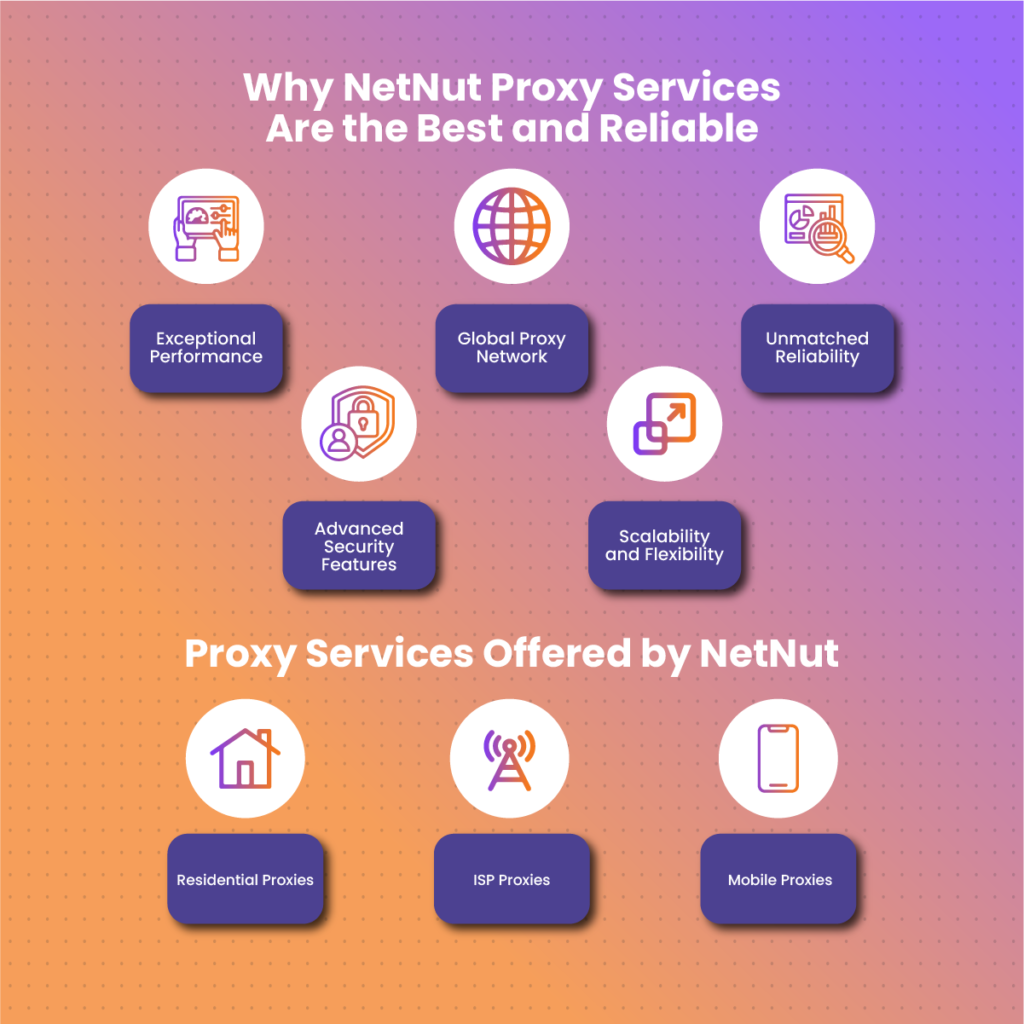
NetNut offers 85M plus residential IPs across 195 plus countries. This gives users wide global coverage for scraping, ad verification, SEO tracking, ecommerce monitoring, and market research.
One of NetNut’s biggest selling points is direct ISP routing. In simple words, NetNut is designed to route traffic through ISP networks for speed and stability. This can be useful for large data tasks where consistent performance matters.
NetNut residential plans include unlimited connections. This is important for scraping teams that run many tasks at the same time.
The plans also include city and state selection. This is useful for location based scraping, local SEO checks, regional pricing, ad checks, and market research.
API access is included, so technical users can connect NetNut proxies to custom scripts, scraping tools, bots, and internal systems.
IP whitelisting is also included. This makes authentication easier for teams that use servers or fixed office IPs.
NetNut also provides a dedicated account manager on residential packages. This is useful for business users who need setup help, proxy pool optimization, and support for specific use cases.
NetNut Pros
NetNut is strong for high volume residential scraping. The platform is built around performance, stability, and large scale proxy usage.
Its unlimited connections are a major advantage. If your team runs many scraping tasks at once, this can matter more than a lower entry price.
NetNut also becomes cost effective at larger bandwidth levels. Its 2 TB monthly plan is priced at $1.87 per GB, and annual billing lowers it to $1.59 per GB.
The platform also gives business users helpful features like city and state targeting, API access, IP whitelist, and dedicated account manager support.
NetNut is also a good fit for users who already have their scraping stack. If you use Scrapy, Puppeteer, Selenium, Playwright, Python scripts, or proxy managers, NetNut can work as a strong proxy backend.
NetNut Cons
NetNut is more expensive to start than Decodo. The entry residential plan costs $99 per month, while Decodo starts at $11.25 per month.
NetNut also has a smaller residential IP pool than Decodo. NetNut lists 85M plus residential IPs, while Decodo lists 115M plus residential IPs.
NetNut is also less beginner friendly for small users because it is more focused on teams that already need larger residential traffic.
Decodo has a stronger low cost entry path and a broader beginner friendly scraping API experience.
NetNut Pricing
NetNut residential proxy pricing is based on monthly or annual plans. Monthly pricing starts at $99 for 28 GB.
| NetNut Residential Plan | Included Traffic | Monthly Price | Price Per GB |
|---|---|---|---|
| Starter | 28 GB | $99 per month | $3.53 per GB |
| Advanced | 72 GB | $249 per month | $3.45 per GB |
| Production | 150 GB | $499 per month | $3.32 per GB |
| Semi Pro | 350 GB | $999 per month | $2.85 per GB |
| Professional | 800 GB | $1,999 per month | $2.49 per GB |
| Master | 2 TB | $3,750 per month | $1.87 per GB |
NetNut also offers annual billing with lower monthly equivalent pricing.
| NetNut Annual Plan | Included Traffic | Monthly Equivalent | Price Per GB |
|---|---|---|---|
| Starter | 28 GB | $84 monthly | $3.00 per GB |
| Advanced | 72 GB | $210 monthly | $2.93 per GB |
| Production | 150 GB | $423 monthly | $2.82 per GB |
| Semi Pro | 350 GB | $850 monthly | $2.43 per GB |
| Professional | 800 GB | $1,696 monthly | $2.12 per GB |
| Master | 2 TB | $3,180 monthly | $1.59 per GB |
NetNut is not the cheapest option for small tests. But for high volume users, the lower per GB rates can make it very competitive.
NetNut Best For
NetNut is best for users who need fast, stable residential proxies for serious scraping workloads.
It is a good fit for ecommerce price monitoring, SEO rank tracking, ad verification, review monitoring, travel fare tracking, market research, brand monitoring, and public web data collection.
It is especially useful for teams that already have scraping tools and only need strong residential proxy infrastructure.
Choose NetNut if you want high volume residential proxies, unlimited connections, and business level support.
Feature by Feature Comparison
Decodo wins on entry pricing. Its smallest residential proxy plan starts at $11.25 per month for 3 GB. NetNut starts at $99 per month for 28 GB. If you are testing proxies or running small projects, Decodo is easier to start with.
NetNut wins on high volume pricing. Its large residential plans go down to $1.87 per GB monthly and $1.59 per GB on annual billing. Decodo lists larger residential rates from $2 per GB, so NetNut can be cheaper for very high traffic users.
Decodo wins on residential proxy pool size. It lists 115M plus residential IPs, while NetNut lists 85M plus residential IPs. Both are strong, but Decodo has the larger public number.
NetNut wins on unlimited connections. Every residential package includes unlimited connections, which is helpful for large scale scraping teams.
Decodo wins on geo targeting depth. It supports continent, country, state, city, ZIP code, and ASN targeting. NetNut includes city and state selection, which is useful, but Decodo gives more targeting options.
NetNut wins on residential proxy performance focus. Its direct ISP based routing is a strong selling point for users who care about speed and stable data collection.
Decodo wins on beginner experience. The dashboard, pricing, small plans, trial options, support, and scraping tools make it easier for new users.
NetNut wins for teams that already know they need serious residential traffic and want a provider optimized for large workloads.
Pricing
Pricing is one of the biggest differences between Decodo and NetNut.
Decodo is cheaper to start. You can begin with 3 GB for $11.25 per month, 10 GB for $35 per month, or use pay as you go pricing at $4 per GB. This is perfect for users who are testing proxies or running smaller scraping tasks.
NetNut starts at $99 per month for 28 GB. That gives a lower per GB price than Decodo’s 3 GB plan, but it requires a bigger upfront spend.
For example, Decodo’s 3 GB plan costs $3.75 per GB. NetNut’s Starter plan costs $3.53 per GB, but you must buy 28 GB. So NetNut is slightly cheaper per GB at the entry plan level, but Decodo is much cheaper to start.
At high volume, NetNut becomes more attractive. Its Master plan gives 2 TB at $1.87 per GB monthly, or $1.59 per GB with annual billing. Decodo’s public residential pricing starts from $2 per GB on larger plans.
Simple pricing verdict:
Choose Decodo if you want lower monthly commitment and flexible testing.
Choose NetNut if you need high volume residential bandwidth and want lower per GB pricing at scale.
Ease of Use
Decodo is easier for beginners.
The pricing is simple, the starting plans are small, and the dashboard is designed for quick setup. A new user can buy a small plan, set up username and password authentication, choose a location, pick rotating or sticky sessions, and start using proxies.
Decodo also offers browser extensions, integrations, help docs, and 24/7 support. This makes it easier for non technical users.
NetNut is also not difficult, but it is more business focused. The starting plan is larger, and the provider is better suited for teams that already know what they are doing with proxies.
If you are new to proxies, Decodo feels more comfortable.
If you already run scraping projects and need scale, NetNut is easy enough.
Performance and Proxy Quality
Both Decodo and NetNut are strong for proxy quality.
Decodo has a larger listed residential proxy pool, strong targeting, fast average response time, and high success rate claims. It is good for SEO tools, ecommerce checks, ad verification, public scraping, and research tasks.
NetNut focuses more heavily on speed and stability through direct ISP routing. This can be useful for high volume scraping where consistent data transfer and fewer bottlenecks matter.
For normal scraping tasks, both providers can perform well.
For small and mid sized tasks, Decodo gives excellent value.
For large scale residential scraping, NetNut may be better because of unlimited connections and performance focused architecture.
The best choice depends on your target websites. Some websites may work better with Decodo, while others may work better with NetNut. Testing both with real targets is always the safest approach.
Customer Support
Decodo offers 24/7 technical support, help documentation, integrations, browser extensions, and a beginner friendly support experience.
NetNut includes dedicated account manager support on its residential proxy packages. This is a useful advantage for business users who need help with proxy configuration, pool optimization, and scaling.
For beginners, Decodo support may feel easier.
For high volume business users, NetNut’s dedicated account manager support can be more valuable.
Refund Policy
Decodo offers a 14 day money back option for eligible self service products, but users must meet conditions. These conditions may include first purchase rules, usage limits, and account status requirements. Decodo also offers a 3 day residential proxy trial with 100 MB.
NetNut offers trial options, including residential proxy trial access. Its refund approach is usually more limited and may depend on usage and approval.
For both providers, the safest approach is to test first. Use a trial or small plan, check your target websites, measure success rates, and then upgrade.
Which One is Better for Beginners?
Decodo is better for beginners.
It has lower entry pricing, a cleaner dashboard, smaller plans, pay as you go access, strong documentation, browser extensions, and 24/7 support.
A beginner can start with $11.25 per month instead of committing to a $99 plan. That makes Decodo much safer for testing.
NetNut is better for users who already know they need at least 28 GB of traffic and want stronger residential performance at scale.
For most beginners, Decodo is the better choice.
Which One is Better for Advanced Users?
NetNut is better for advanced users who need high volume residential proxy traffic.
Its unlimited connections, direct ISP routing, city and state selection, IP whitelist, API access, and dedicated account manager support make it strong for serious scraping teams.
Decodo is also good for advanced users, especially those who want deeper geo targeting, scraping APIs, and more flexible plans. But if the main need is large residential bandwidth, NetNut can be stronger.
So the advanced user verdict depends on your setup.
Choose Decodo if you want advanced targeting and scraping APIs.
Choose NetNut if you want high volume residential traffic and unlimited connections.
Real World Use Cases
SEO Rank Tracking
SEO rank tracking needs location based access, stable sessions, and accurate search result data.
Decodo is a strong choice for SEO agencies and smaller rank tracking teams. Its city, ZIP code, ASN, country, and state targeting make it useful for local SEO checks.
NetNut is also strong for SEO tracking, especially if you need to run many checks at once. Its unlimited connections and residential proxy infrastructure can help with larger workloads.
Best pick: Decodo for small and mid sized SEO teams. NetNut for high volume SEO tracking.
Ecommerce Price Monitoring
Ecommerce price monitoring means collecting prices, stock status, seller details, shipping data, reviews, and product listings.
Decodo is a good option for ecommerce teams that need affordable proxies and scraping APIs. Its targeting options are useful for checking prices in different locations.
NetNut is better for high volume price monitoring. If you already have your own ecommerce scraper and need stable residential traffic, NetNut is a strong backend proxy choice.
Best pick: Decodo for affordable ecommerce scraping. NetNut for high volume monitoring.
Ad Verification
Ad verification needs real user style access from different regions. You may need to check if ads appear correctly in specific locations.
Decodo is good for ad verification because it has strong residential coverage and detailed geo targeting.
NetNut is good for larger ad verification workflows because of unlimited connections and stable residential traffic.
Best pick: Decodo for detailed location targeting. NetNut for large scale ad checks.
Travel Fare Tracking
Travel websites often use location based pricing and anti bot systems. This makes proxy quality important.
Decodo can work well for smaller travel fare tracking tasks, especially if you need city or country based access.
NetNut is better for higher volume travel scraping because of its speed focused residential proxy setup.
Best pick: Decodo for smaller fare tracking. NetNut for high volume travel data collection.
Market Research
Market research can include collecting product listings, reviews, business data, search results, job listings, prices, and competitor data.
Decodo is better for small teams that want affordable proxies and scraping APIs.
NetNut is better for teams that already have a scraping system and need strong residential proxy performance.
Best pick: Decodo for flexible research workflows. NetNut for larger proxy first research projects.
Final Verdict: Is Decodo Better Than NetNut?
Decodo is better than NetNut if you want affordable pricing, easier setup, stronger entry level flexibility, deeper targeting options, and a more beginner friendly proxy experience.
NetNut is better than Decodo if you need high volume residential proxy traffic, unlimited connections, direct ISP based routing, and better per GB pricing at larger bandwidth levels.
The final choice depends on your usage.
Choose Decodo if you are a beginner, freelancer, SEO agency, small ecommerce team, or marketer who wants strong proxies without a high monthly commitment.
Choose NetNut if you are running larger scraping projects and need stable residential proxy traffic at scale.
- For beginners, Decodo is the better choice.
- For small teams, Decodo gives better value.
- For high volume users, NetNut can be more cost effective.
- For advanced residential proxy scraping, NetNut is stronger.
FAQs About Decodo vs NetNut
Is Decodo the same as Smartproxy?
Yes, Decodo is the new name for Smartproxy. The company rebranded, but it still offers residential proxies, static residential proxies, mobile proxies, datacenter proxies, scraping APIs, and unblocker tools.
Is Decodo better than NetNut?
Decodo is better if you want affordable entry pricing, simple setup, strong location targeting, and a beginner friendly dashboard. NetNut is better if you need high volume residential proxies, unlimited connections, and direct ISP based routing.
Which is cheaper, Decodo or NetNut?
Decodo is cheaper to start because its residential plans begin at $11.25 per month for 3 GB. NetNut starts at $99 per month for 28 GB. However, NetNut can be cheaper per GB at very high volume, especially with annual billing.
Is Decodo good for web scraping?
Yes, Decodo is good for web scraping. It offers residential proxies, datacenter proxies, mobile proxies, Site Unblocker, Web Scraping API, ecommerce scraping tools, SERP scraping tools, and social media scraping APIs.
Is NetNut good for web scraping?
Yes, NetNut is good for web scraping, especially high volume residential proxy scraping. It offers 85M plus residential IPs, unlimited connections, city and state targeting, API access, IP whitelist, and Website Unblocker.
Which provider is better for SEO tasks?
Decodo is better for small and mid sized SEO teams because it offers detailed geo targeting and affordable plans. NetNut is better for larger SEO tracking workloads that need many concurrent connections.
Which provider is better for ecommerce scraping?
Decodo is better for affordable ecommerce scraping and teams that need scraping APIs. NetNut is better for high volume ecommerce monitoring where residential proxy performance and unlimited connections matter.
Do Decodo and NetNut offer free trials?
Yes, both providers offer trial options. Decodo offers a 3 day residential proxy trial with 100 MB and eligible 14 day money back terms. NetNut also offers residential proxy trial options.
Which proxy provider should I choose?
Choose Decodo if you want affordable proxies, easy setup, and strong targeting. Choose NetNut if you need high volume residential traffic, unlimited connections, and performance focused proxy infrastructure.